home |  electronics |  toolbox |  science club |  tuxtalk |  photos |  e-cards |  online-shop


October 2026

How to avoid Kahm Yeast

Kahm yeast is a harmless wild yeast that forms a flat, wrinkled, or powdery white film on the surface of fermented foods like pickles and sauerkraut. Kahm yeasts are not a single species of yeasts. The term refers to a group of oxidative yeasts. Oxygen is important for the growth of all oxidative yeasts.

Fermentation is all about creating the right terrain to select for lactic acid bacteria. Any fermentation will start with a random mixture of all kinds of microbes. You want to create a terrain where lactic acid bacteria out-competes everything else. Lactic acid bacteria should thrive, occupy all the physical surfaces and push everything else aside. Lactic acid bacteria and all the other microbes compete for the same resources and physical spaces. You ensure a successful fermentation process by structuring the terrain such that lactic acid bacteria wins.

Kahm yeast does not spoil the food but it ruins the taste if you let it get out of control. It did not bother me when I started with fermentation. It was just happening once in a while. At that time I used a big fermentation crock pot with ceramic weights and an air lock system built into the lid. These pots have a large air space at the top and kahm yeast would form quite often.

I have now much more experience with fermentation and I would never go back to that crock pot. The design of that pot is just wrong. If you want to have high quality lactic acid fermentation then you need to make sure that you have zero oxygen right from the start and that's just not possible with such a fermentation crock pot.
Mason jars are perfect for fermentation

Plain mason jars are superior in every aspect to this old big fermentation crock pot. They are also the cheapest way to ferment vegetables. You don't need any special lids or air lock systems. Here is what I do:

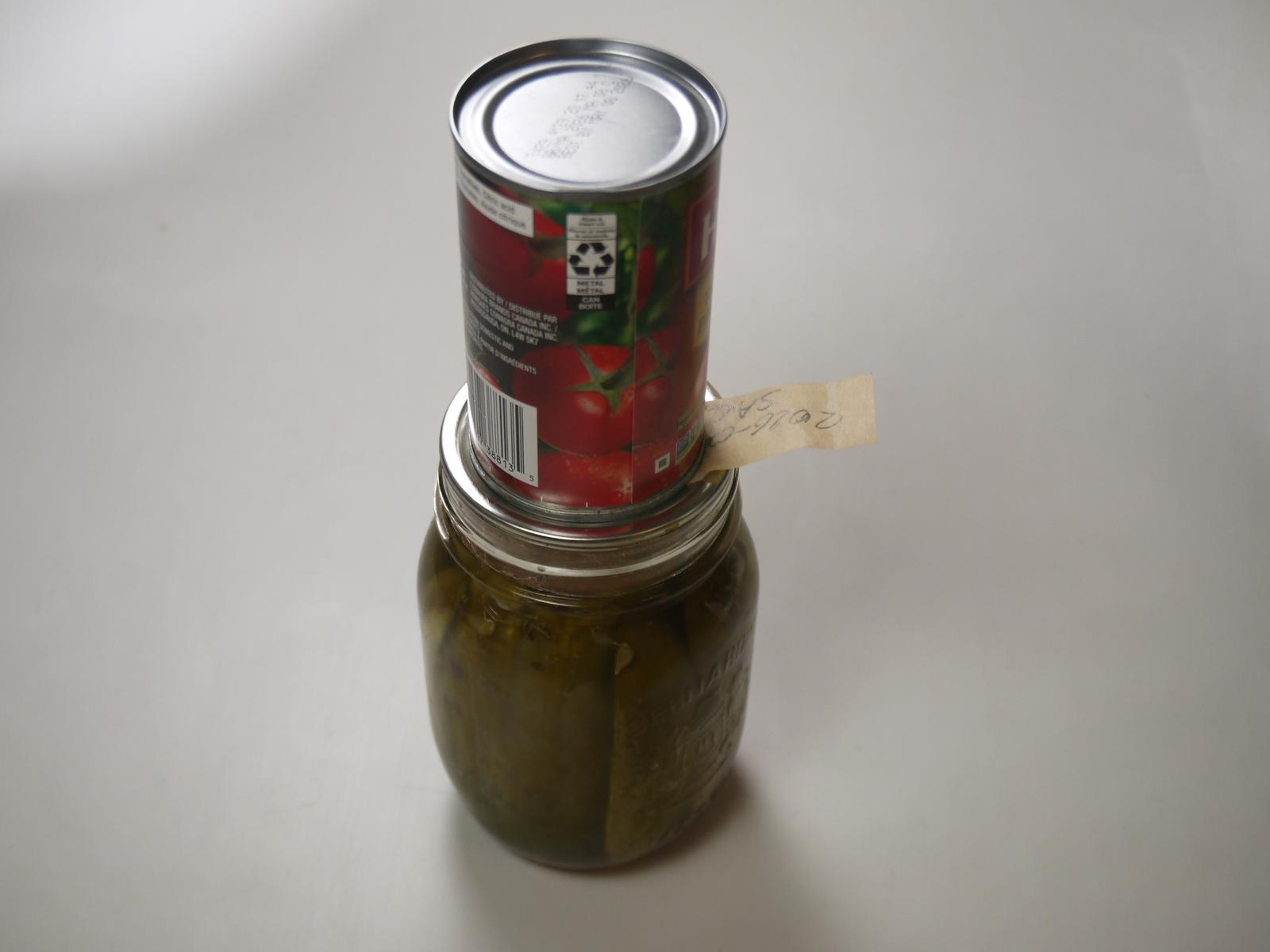
I fill the mason jar to the top with brine and then I just close it with a flat lid (no ring). On top of the lid I put some weight. This makes a valve. If gasses form inside the jar then they can push the lid up and the gas (plus maybe some brine) is released. The weight closes the lid immediately. There will be zero air getting from the outside into the jar.

Mason jar fermentation: Put weight on top of the lid and you have a valve.
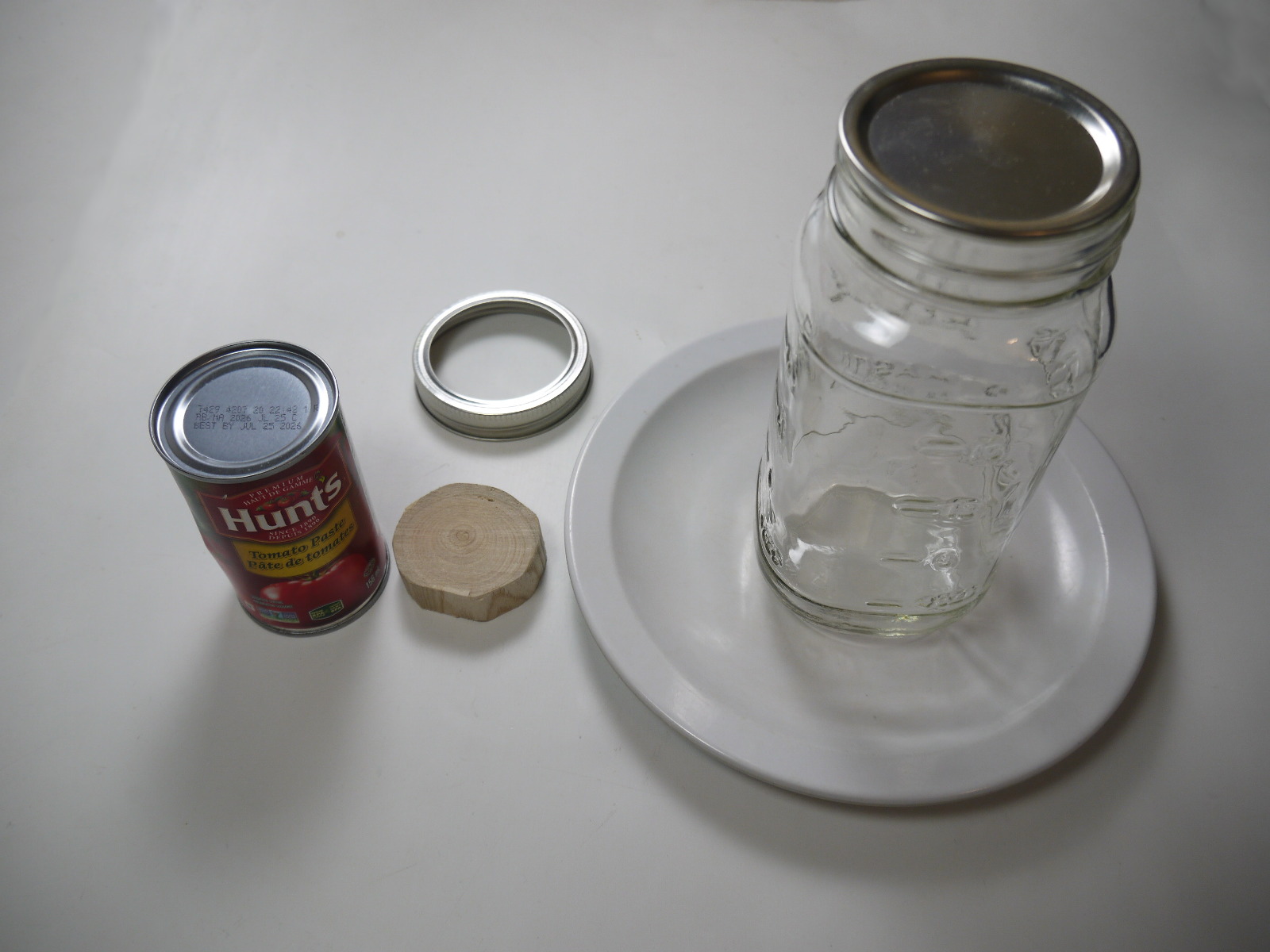
Mason jar fermentation: You put weight on top of the lid and you have a valve. The components that I use for this setup: A tin with tomato paste as a weight. I used to use a glass of water but the tin is easier to handle and does not spill. The mason jar lid and a round wooden disk as a spacer. You want to keep the vegetables submerged and away from the lid. The plate under the jar catches any overflowing brine. The ring (some call it band) of the mason jar is not used during the ongoing fermentation. I put it back when I decide to store it long-term.

Above you see the components that I use. You see that I use a wooden spacer to keep the vegetables away from the lid. You could use glass fermentation weights but I don't touch or open the jar until I consume the content. Sometimes I keep it for a year or longer. These glass weights are expensive. I have a lot of wood in my yard and I cut these wooden disks from branches of ash, beechwood, maple or elm trees. These disks cost me nothing and they work well.

With this system I get kahm yeast very seldom but I still see it once in a while. The presence of this yeast is a clear indicator that there is some oxygen in the ferment. Where does the oxygen come from? Here is what I have observed:

What to do when kahm yeast forms?

I get kahm yeast rarely but I do see it. Kahm yeast affects the taste if you let it grow and it is actually an indication that mold could eventually form and ruin everything. You can however save the ferment if you intervene within a few days.


This is how my mason jar fermentation setup looks like in practice

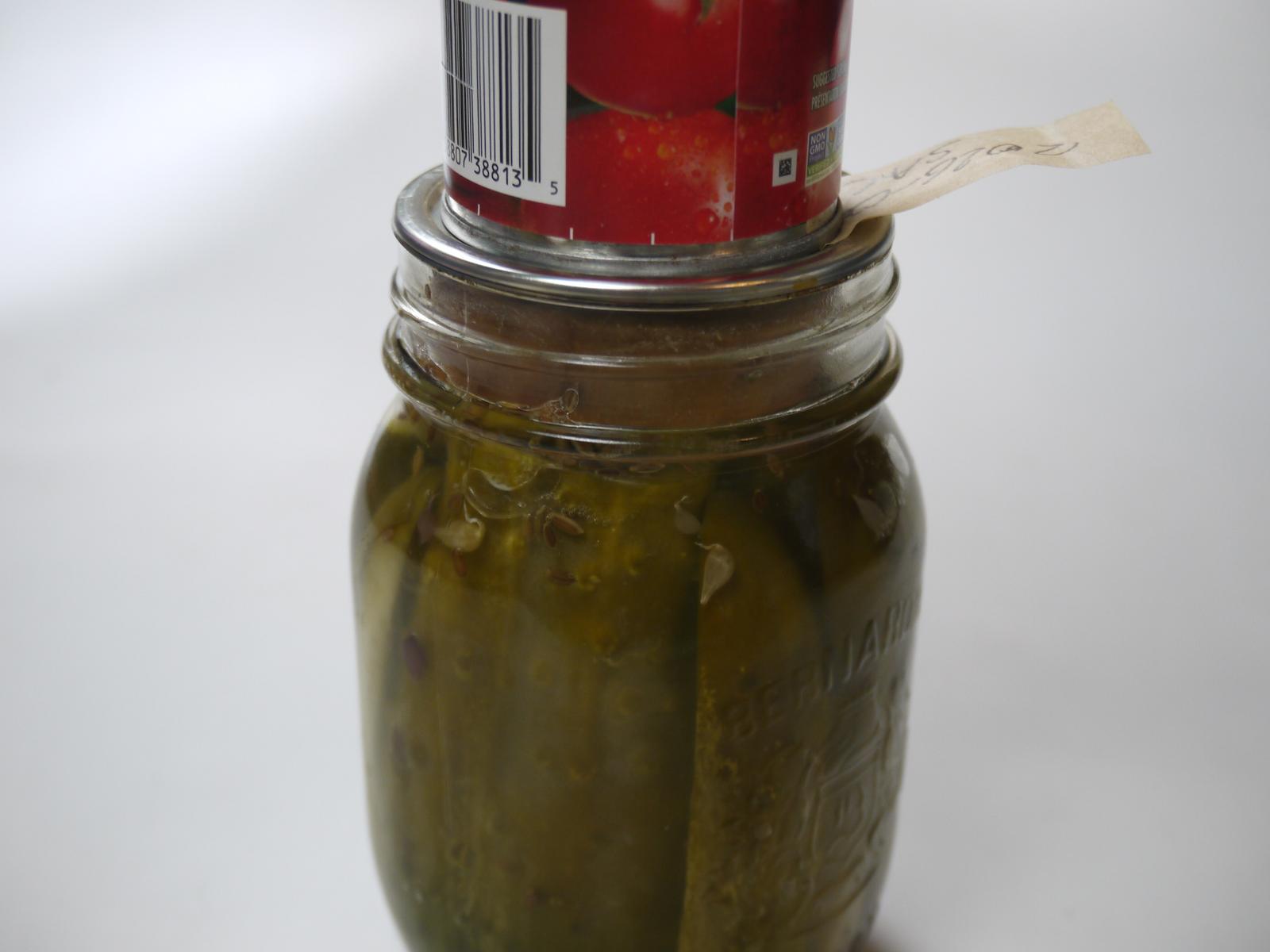
A close-up of the lid area: some brine has been lost but the gap has filled with CO2 and there is no oxygen: no kahm yeast at all
A close-up of the lid area: some brine has been lost but the gap has filled with CO2 and there is no oxygen in the jar: no kahm yeast at all

Botulism

A topic that comes often up in the context of kahm yeast and fermentation is botulism. This is simply a fear campaign designed to make you buy "save foods from the supermarket" instead of preserving food at home. The problem does not exist. There has never been a case in all of north america where home fermentation has resulted in a case of botulism.

The bacterium Clostridium botulinum produces a nerve toxin and this bacteria grows in an anaerobic environment but this bacterium can not survive in an acidic medium. Fermentation is all about structuring the terrain such that lactic acid bacteria can grow. This will make the environment quickly acidic and in-hospitable for Clostridium botulinum.

Botulism has been linked to hot canning operations that do not use vinegar or fruits infused in oil.


Back to NPA blog index

© 2004-2026 Guido Socher